
Darwin's Battle with Anxiety | The Marginalian
“For 25 years extreme spasmodic daily & nightly flatulence: occasional vomiting, on two occasions prolonged during months. Vomiting preceded by shivering, hysterical crying[,] dying sensations or half-faint. & copious very palid urine,”
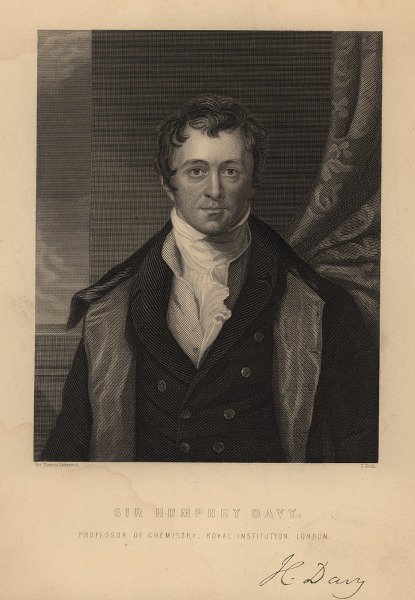
Sir Humphry Davy Used Poetry and Theatre to Bring Science to Life | The Conversation
“Poetry was for him a way to express emotions, thoughts and feelings which had no place in his scientific writings. That said, the books he published could describe chemical experiments in a distinctly poetic language. Coleridge said that he went to Davy’s lectures to increase the number of metaphors that he could use in his poems. “

Early Life | George Stephenson (1781-1848)
“George Stephenson was eighteen years old before he learnt to read. He was now almost a full-grown workman, earning his twelve shillings a week, and having the charge of an engine, which occupied his time to the extent of twelve hours every day. He had thus very few leisure moments that he could call his own.”
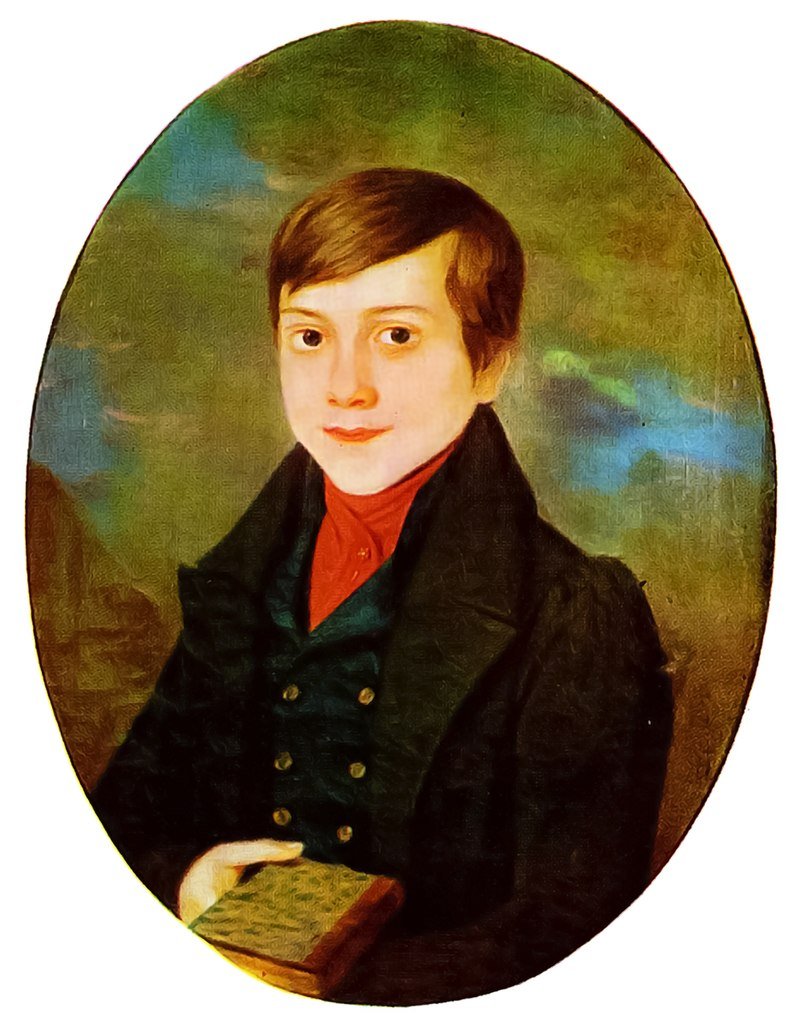
Early Life | Ignaz Semmelweis (1818 -1865) | Book Excerpt
“Defective conventional school education had left his vision clear to see only what was to be seen, and his intellectual faculties free — so that he could think for himself and form independent judgments and logical inductions from the facts of experience.”
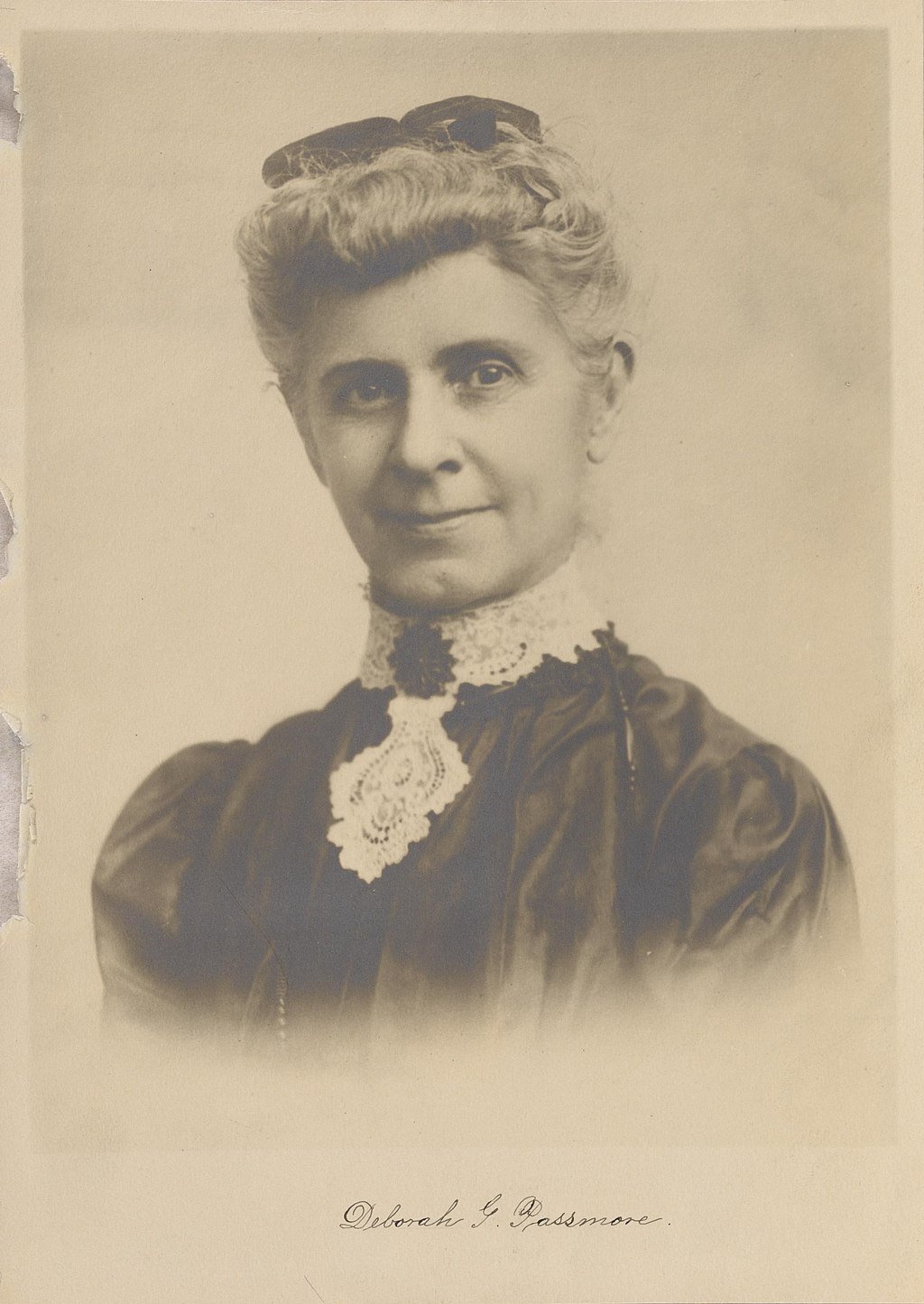
Meet the Women Illustrators of the Pomological Watercolor Collection | Lady Science
“Edward Lee Greene, a botanist known for “Landmarks of Botanical History,” said at the time: “Never in any book did I see a plate that looked as if the original equaled these; I did not know that they could be painted with such perfection.”

Early Life | Isaac Newton (1642-1727)
“For this purpose, he provided himself with little saws, hatchets, hammers, and all sorts of tools, which he acquired the art of using with singular dexterity. The principal pieces of mechanism which he thus constructed were a windmill, a waterclock, and a carriage put in motion by the person who sat in it.”

"Everything but the Stench" | Lapham's Quarterly
“And they do not break. She does not reveal what material they are made of, although it seems as if they were made of wax mixed with something. All parts are correctly named in Latin and Greek. She has studied this art for more than 20 years.”

Early Life | Alice Hamilton (1869-1970)
“Of science we had not even a smattering, beyond what we could gather from my father's favorite Max Muller. Yet in a way we were trained in habits of scientific approach. We were not allowed to make a statement which could be challenged unless we were prepared to defend it. One of my father's favorite quotations was, "Be ready always to give a reason of the hope that is in you."

Giving Overdue Credit to Early Archaeologists' Wives | JSTOR Daily
“In his 1933 Archaeology of Palestine, famed American archaeologist W. F. Albright mused, “where expeditions are mixed it is highly desirable to have the Director’s wife present, both to provide a feminine social arbiter and to avert scandal.”

Life Stories - Love | Michael Faraday (1791-1867)
“You know me as well or better than I do myself. You know my former prejudices, and my present thoughts — you know my weaknesses, my vanity, my whole mind ; you have converted me from one erroneous way, let me hope you will attempt to correct what others are wrong. Again and again I attempt to say what I feel, but I cannot.”

Escape from Nazi Terror | Science History Institute
“I cannot find words to express my gratitude for all you have done for us these last 7 months. Without your generous help dear Max, we would have never been able to escape the big misery in which we found ourselves. Our situation has often been very desperate, and the indescribably generous and huge help that you have given us has helped us to survive this most difficult time in our lives.”

The Newton Mess | Science History Institute
“Only a handful of people had seen the papers since Newton’s death, in 1727. Newton had been orderly in his arrangements, and in the weeks leading up to his death had destroyed some papers. But, oddly, he left no will nor any provision for the manuscripts he left behind.”

The Day Marie Curie Got Snubbed by the French Science World | PBS NEWs Hour
“And Curie still is not a member of the French National Academy.
Marguerite Perey, a French physicist who discovered the element francium, was the first woman to be elected, although this did not occur until 1962, more than half a century after Curie’s defeat.”

Delia Akeley and Osa Johnson’s Early 20th Century Ecomedia and Colonial Extraction | Lady Science
“Baby elephant Toto Tembo died shortly after the Johnsons sold him to the St. Louis Zoo. And two male gorillas, Mbongo and Ngagi, they sold to the San Diego Zoo drew scientists “from around the world to observe their behavior.” Like so many historical figures in museum expeditions and zoo acquisitions the question remains of how to recognize the value of their contributions and still hold them accountable for the harm done.”

Six Dots: The Remarkable Life and Legacy of Child Inventor Louis Braille - Brain Pickings
“Illustrated by the Brooklyn-based Russian artist Boris Kulikov, the empathy-inviting first-person narrative traces young Braille’s immensely inspiring story, beginning with his premature birth, which he survived to be healthy and curious little boy.”